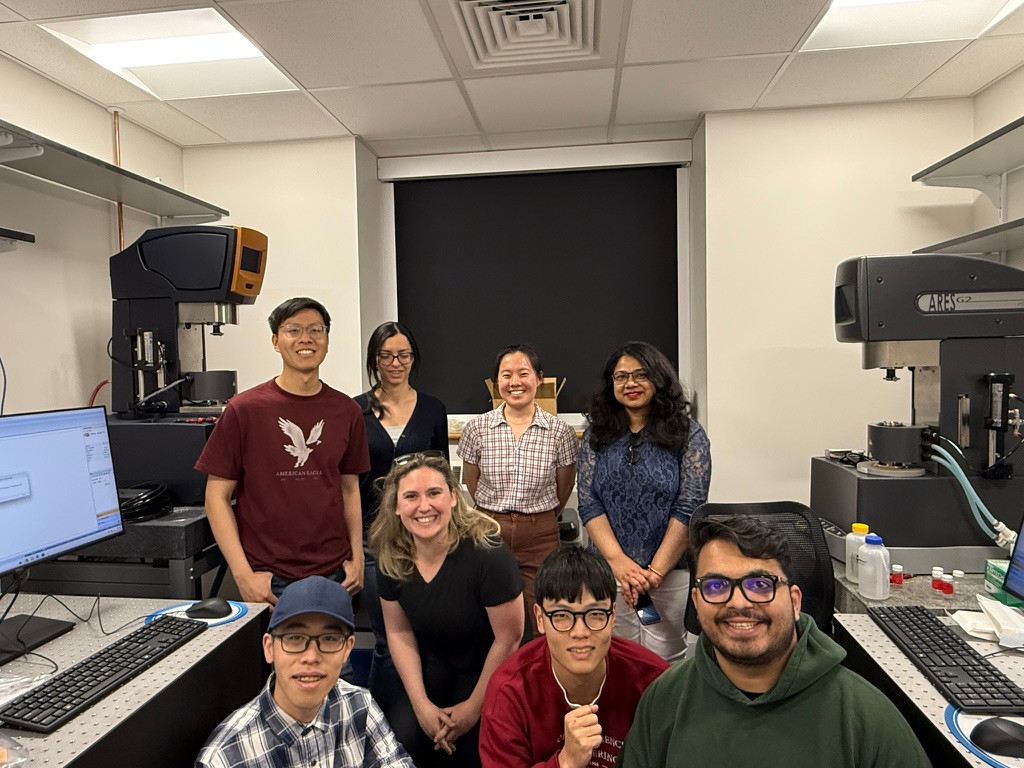
ARES G3 rheometer
Rheometry
Rotational rheometry measures how materials deform and flow under applied shear, characterizing their viscous and elastic response.
- Location
- Room B422A · Rheometry and rheo-optical imaging
Rheometry
Rotational rheometry measures how materials deform and flow under applied shear, characterizing their viscous and elastic response.
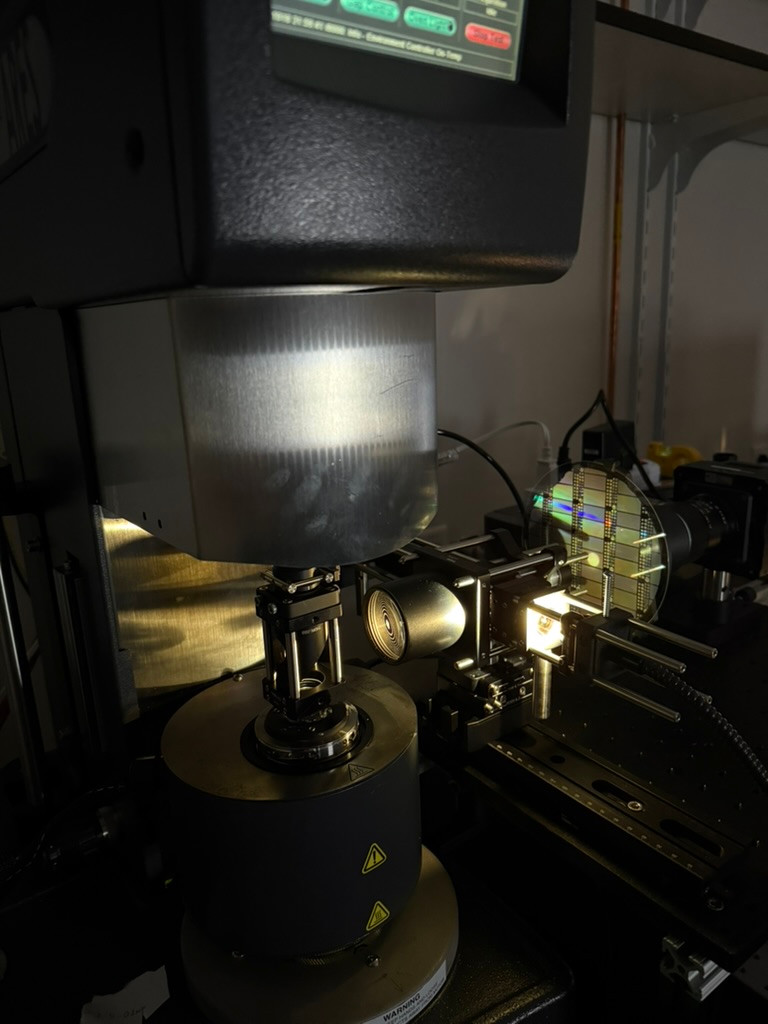
Rheo-optical Imaging
Dedicated rheo-optical imaging with cone-and-plate and parallel-plate geometries. Full-field reflection-mode imaging capable of observing coil–stretch transitions in dilute polymer solutions.
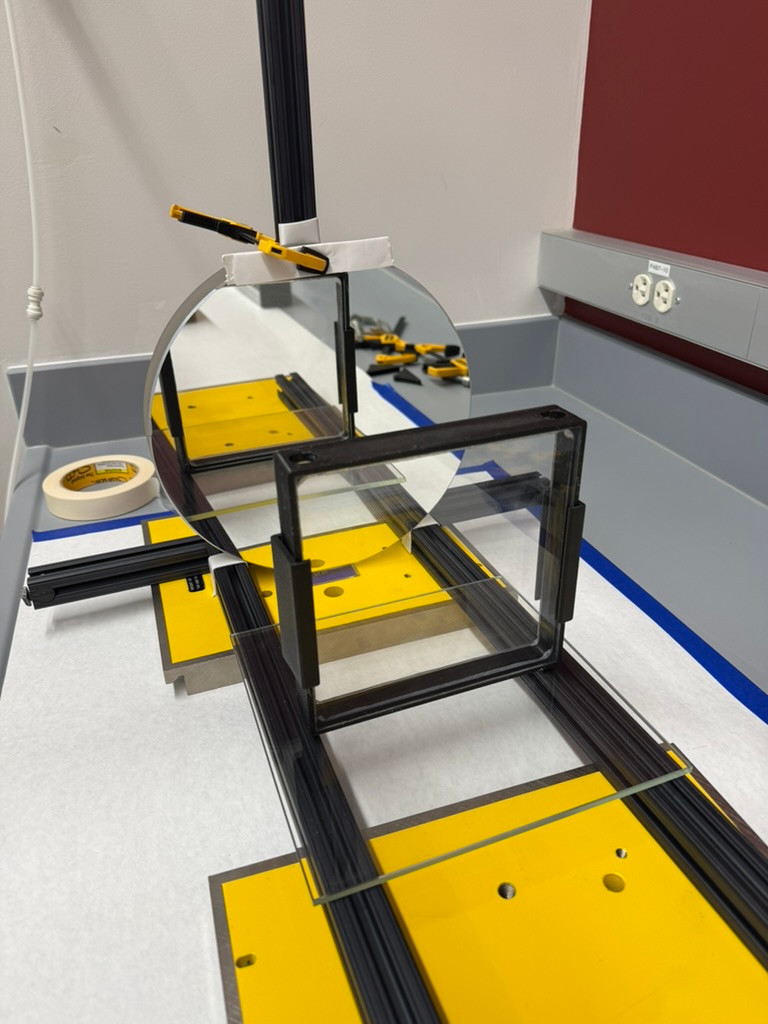
Our custom long-path schlieren system visualizes refractive-index gradients in transparent fluids. We use it to follow evaporation-driven instabilities in viscoelastic fluids.
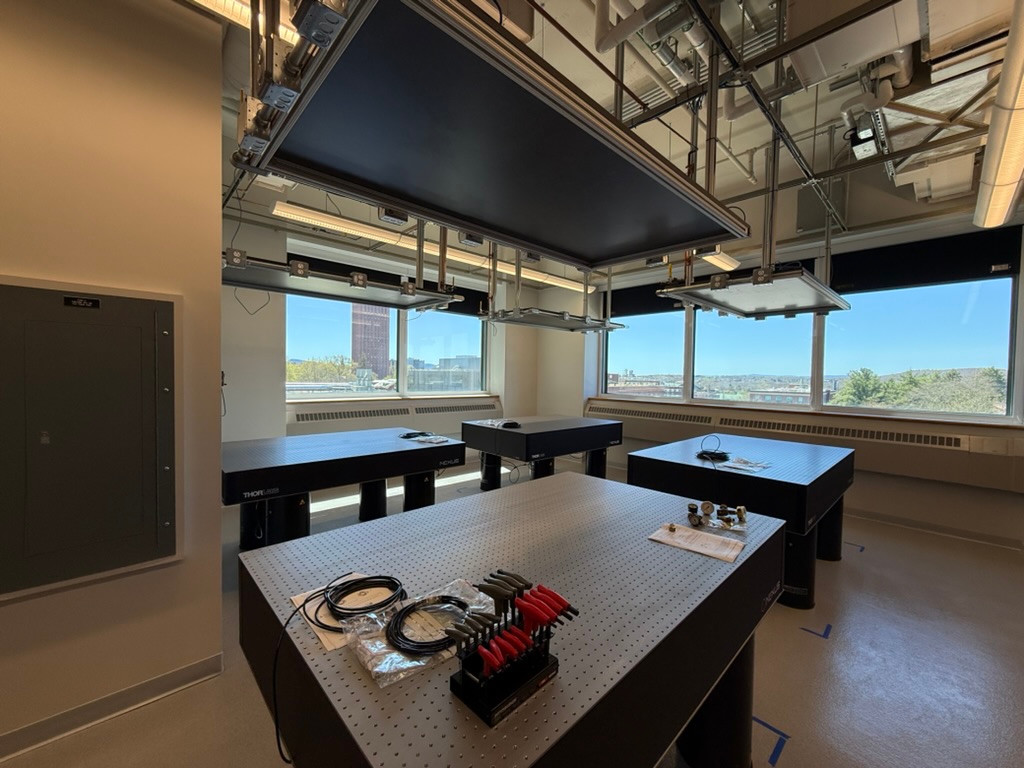
Optics
Fully sealed optical tables with extreme vibration isolation and stability to λ/4.
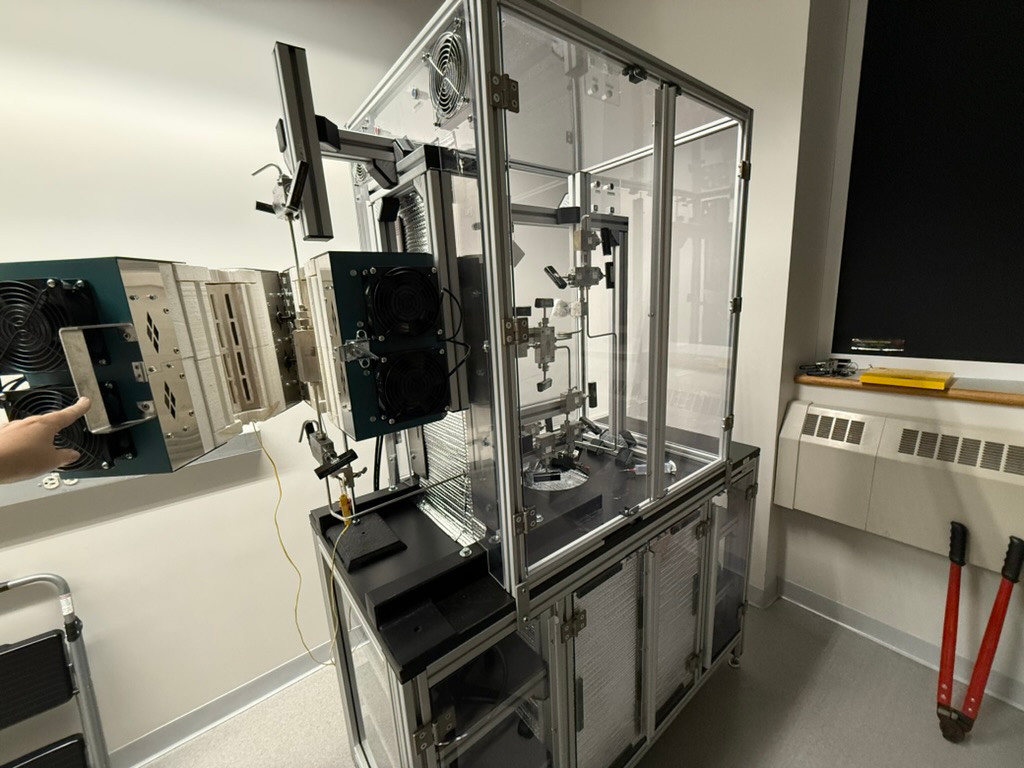
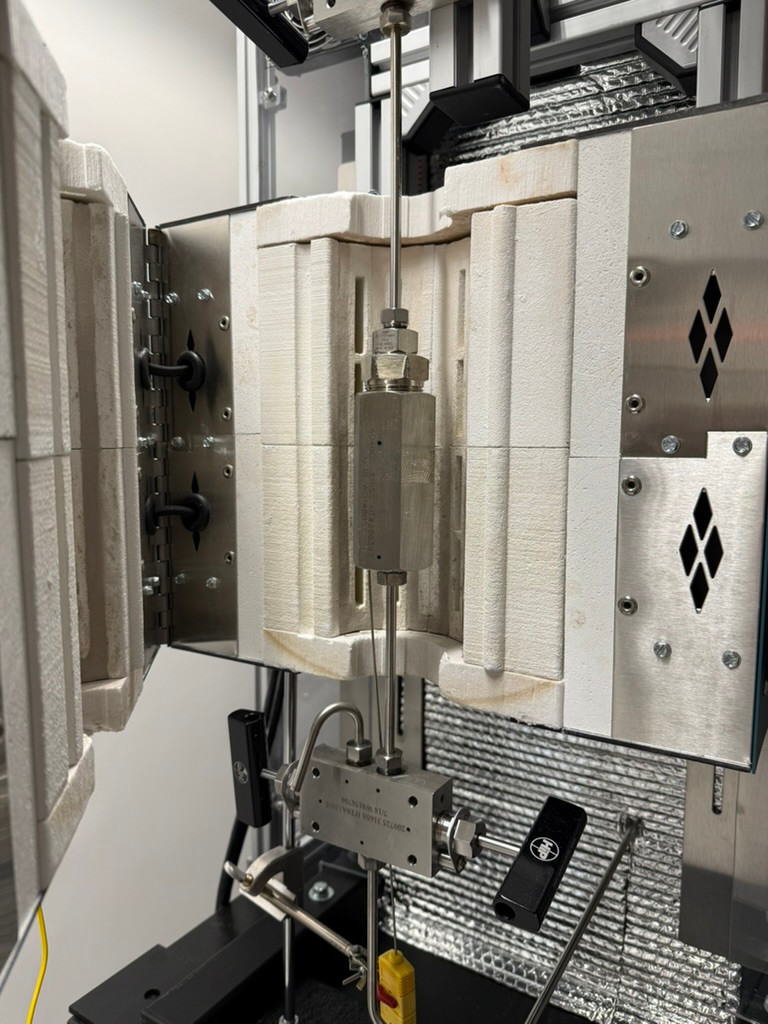
Custom-built by Alan Lesser’s group, this PVT dilatometer measures pressure–volume–temperature behavior at pressures up to 30,000 psi, roughly twice the pressure at the bottom of the Mariana Trench.
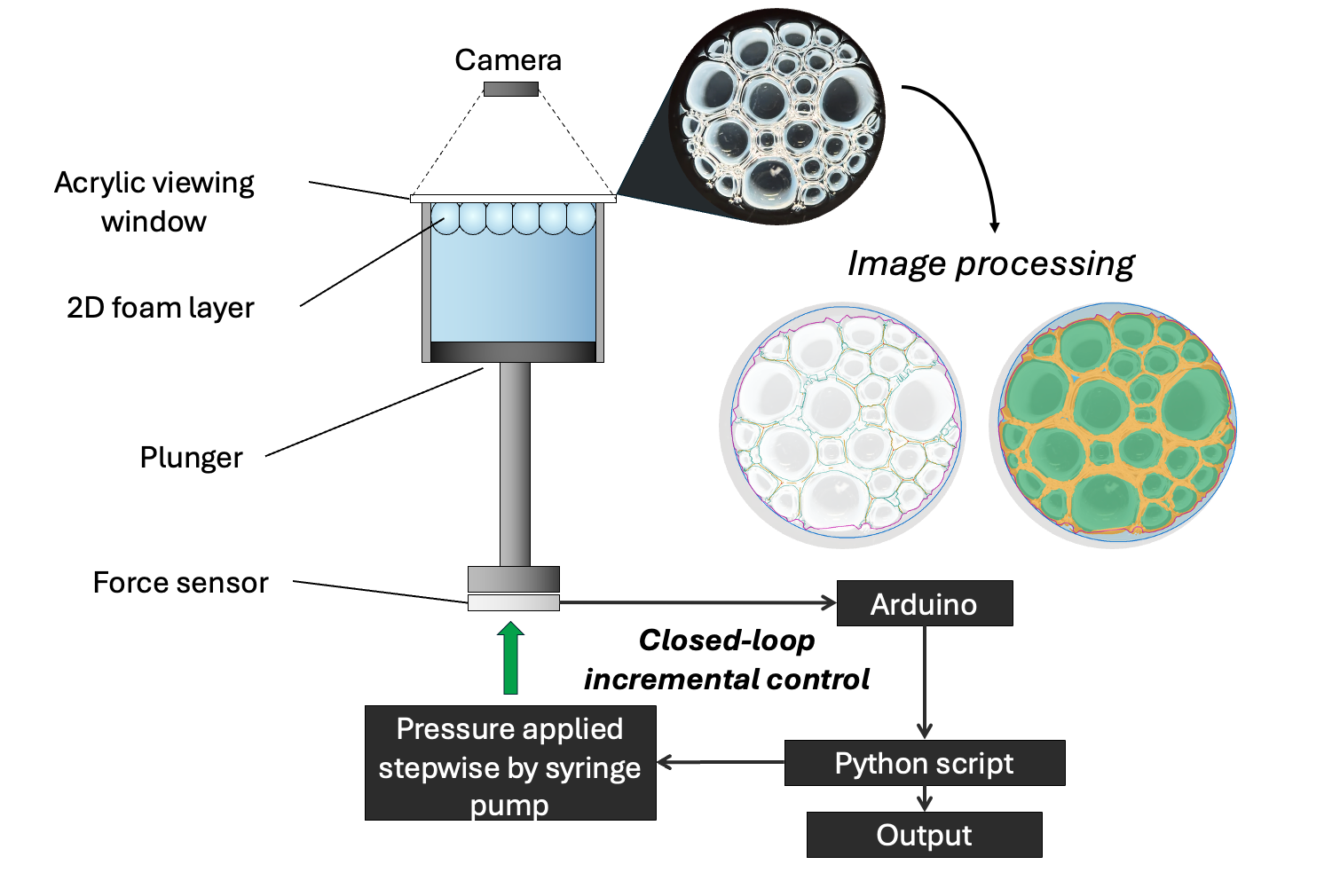
This pressure-cell setup is designed to study foam under controlled pressure. The schematic outlines imaging and feedback control for a 2D foam layer.
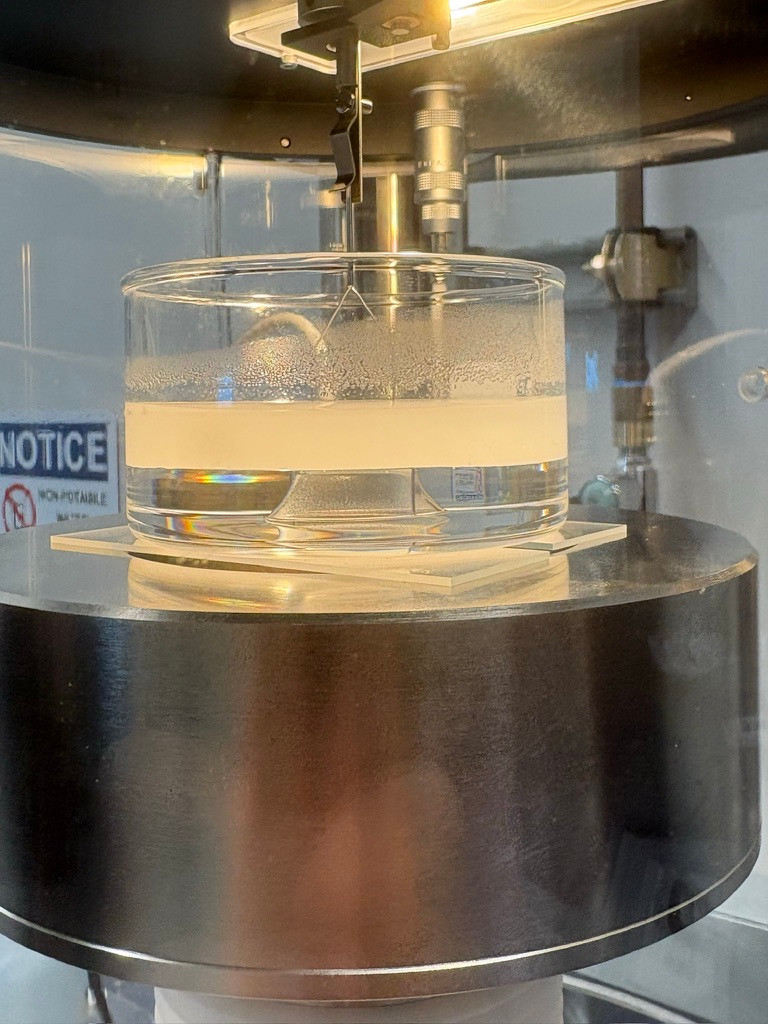
Tensiometer for measuring surface tension and interfacial tension in liquid samples.
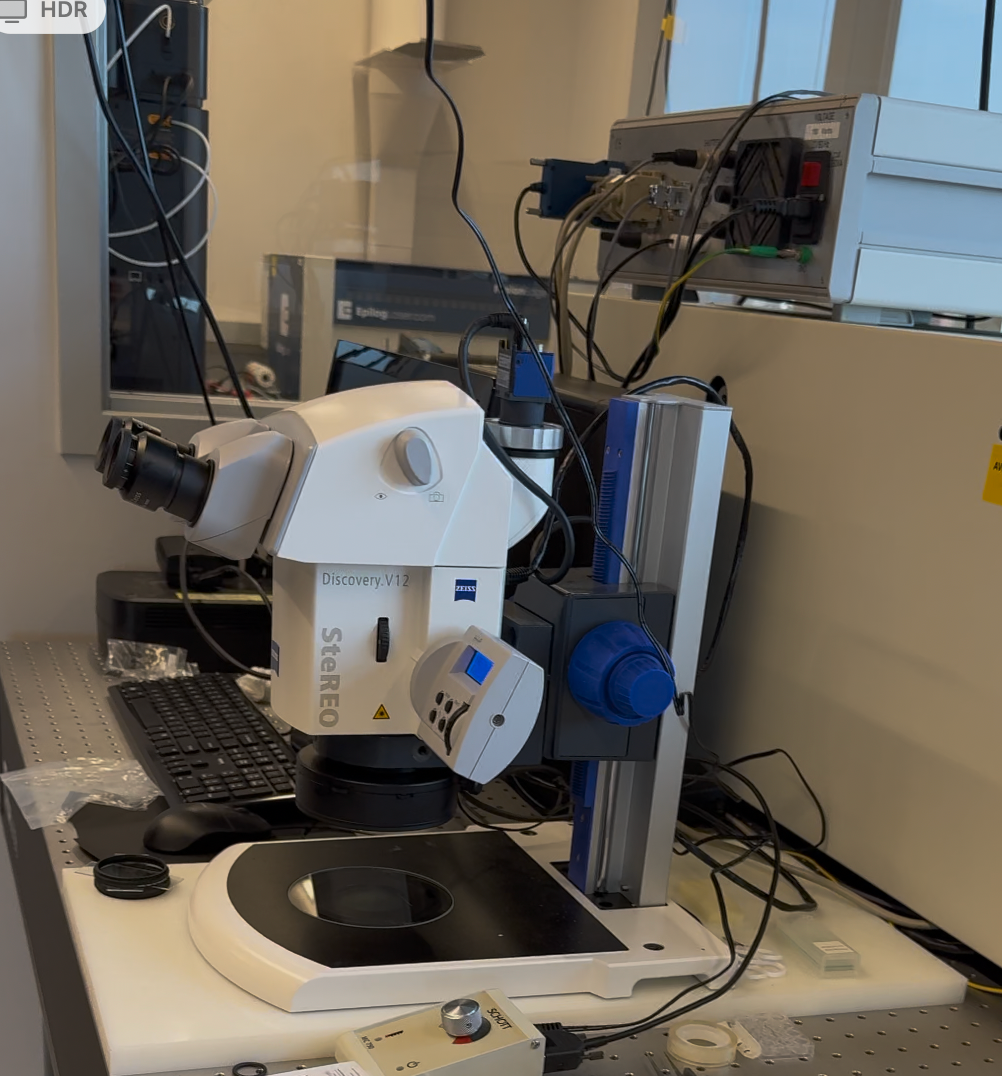
The Zeiss Discovery.V12 microscope provides magnified views for inspecting samples and experimental assemblies.
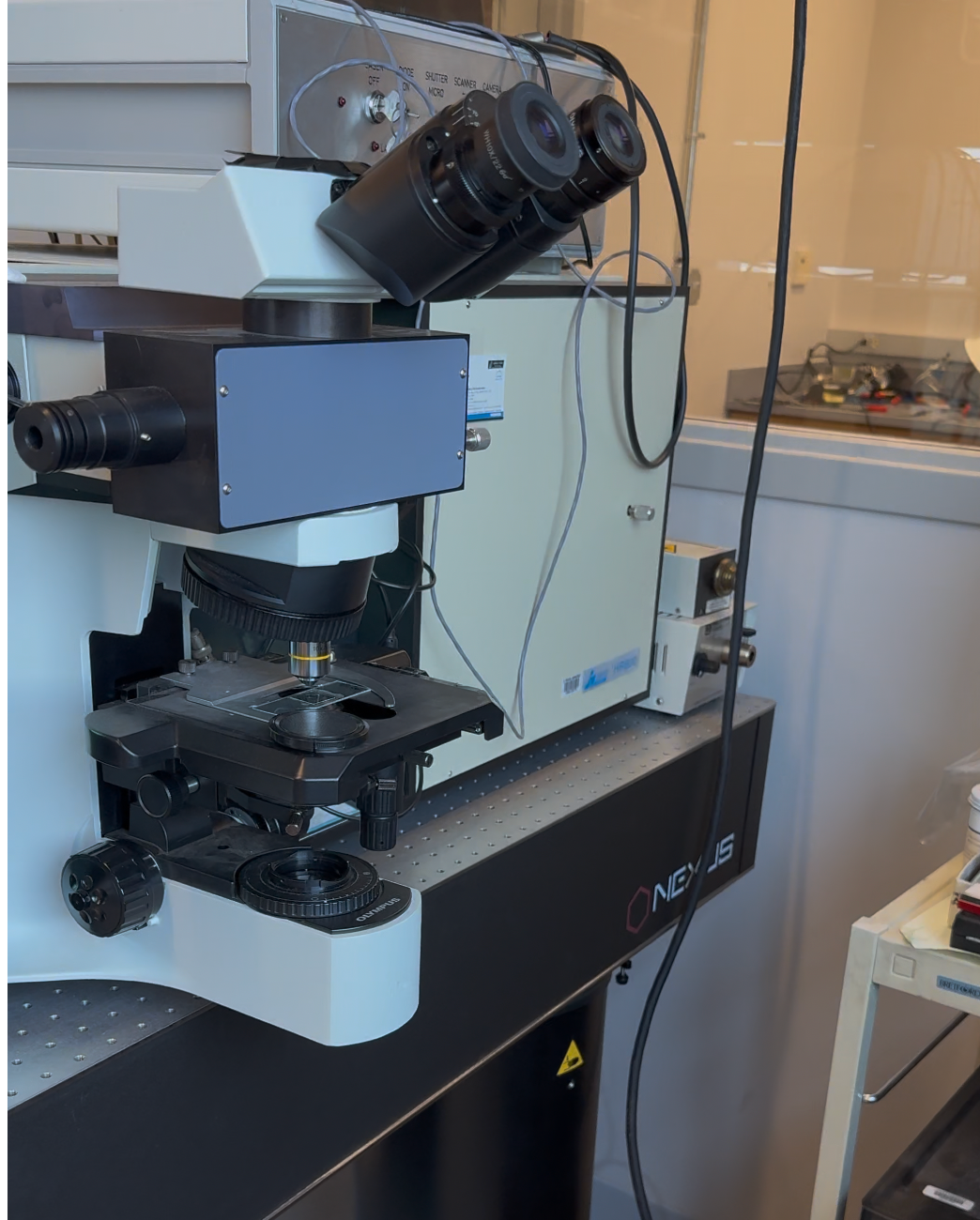
Confocal Raman spectroscopy probes local chemical composition through molecular vibrational signatures.
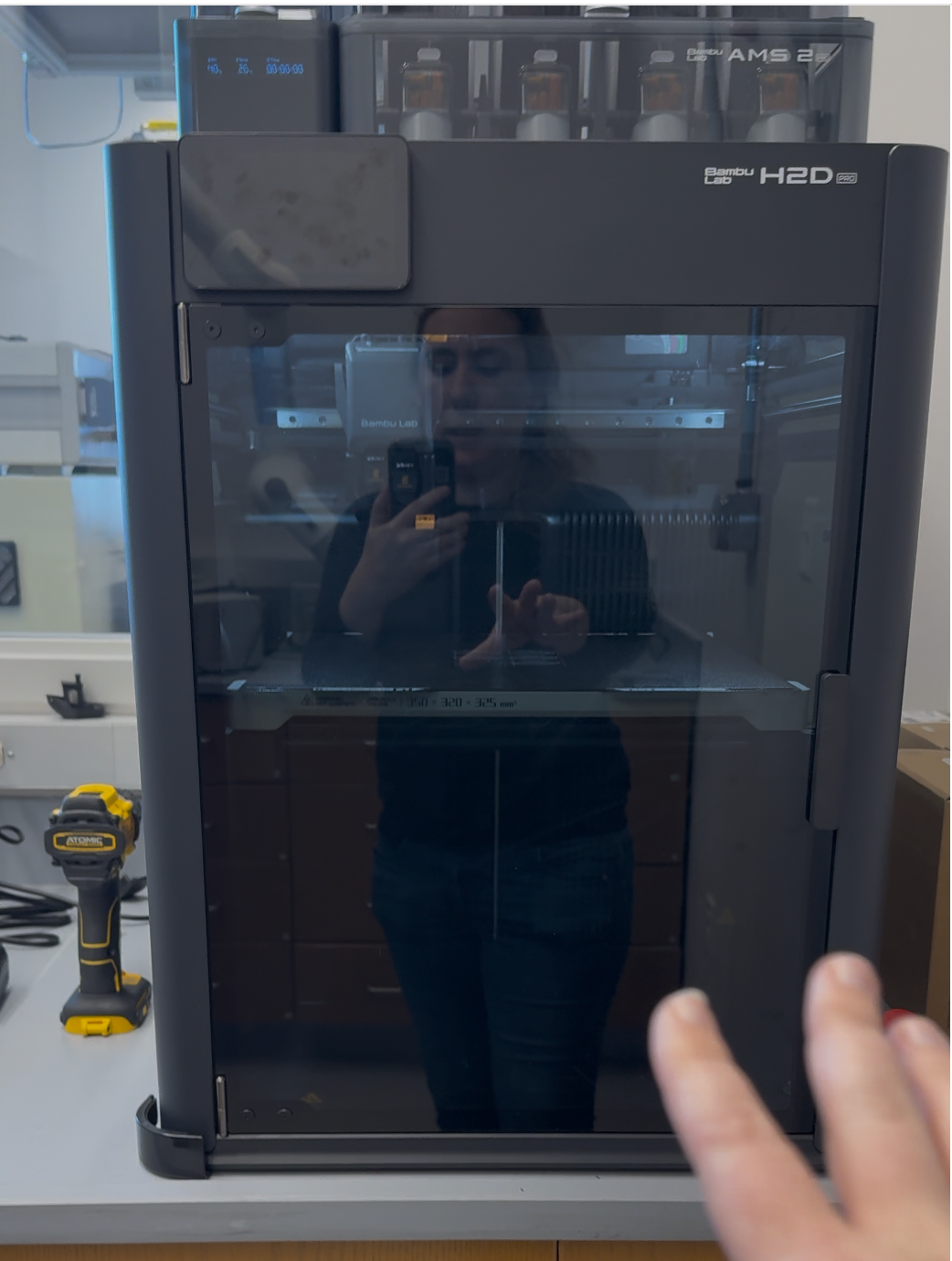
3D printing supports rapid prototyping of custom holders, fixtures, and components for laboratory experiments.
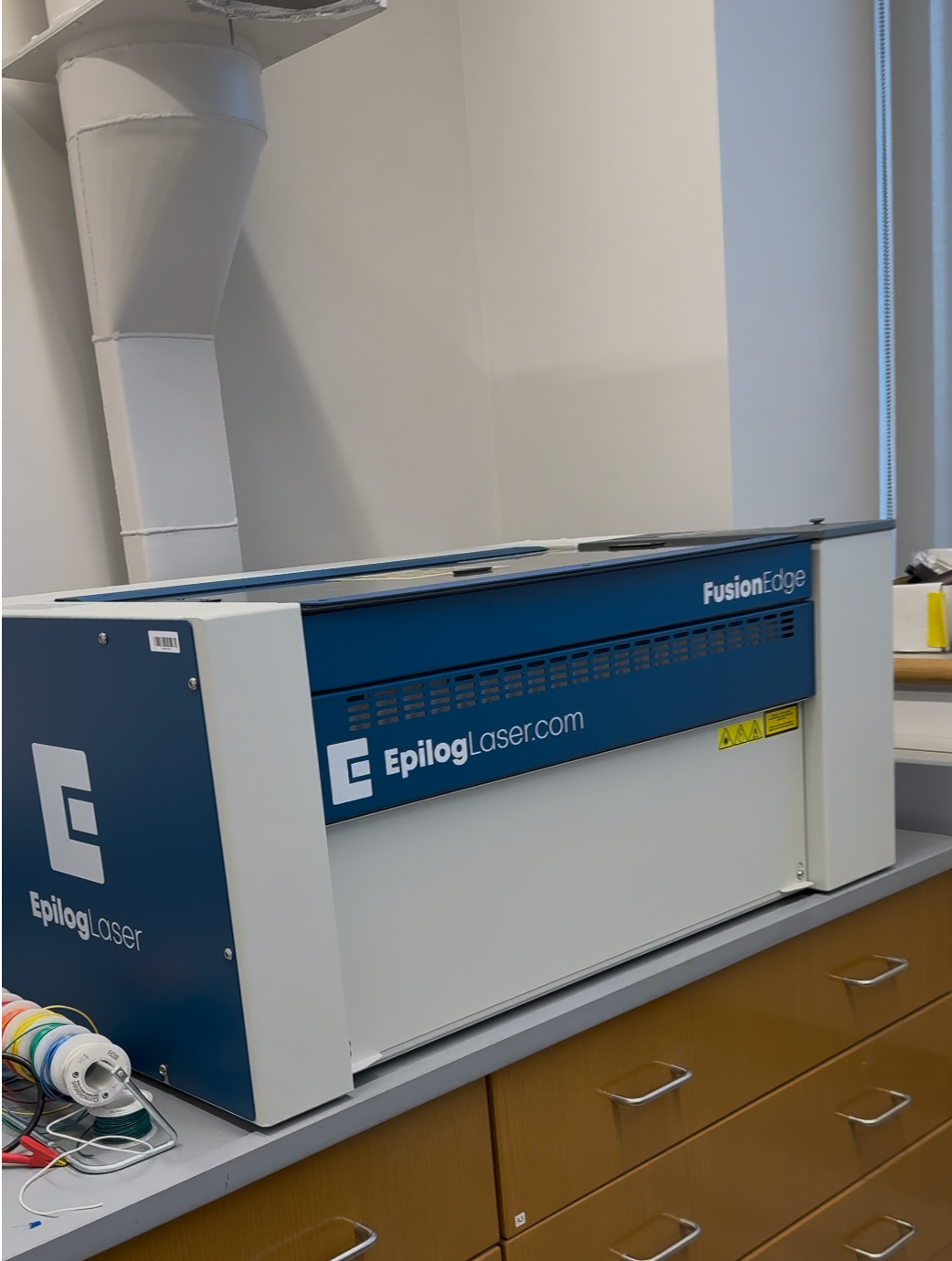
Laser cutting supports fabrication of custom parts and experimental fixtures.
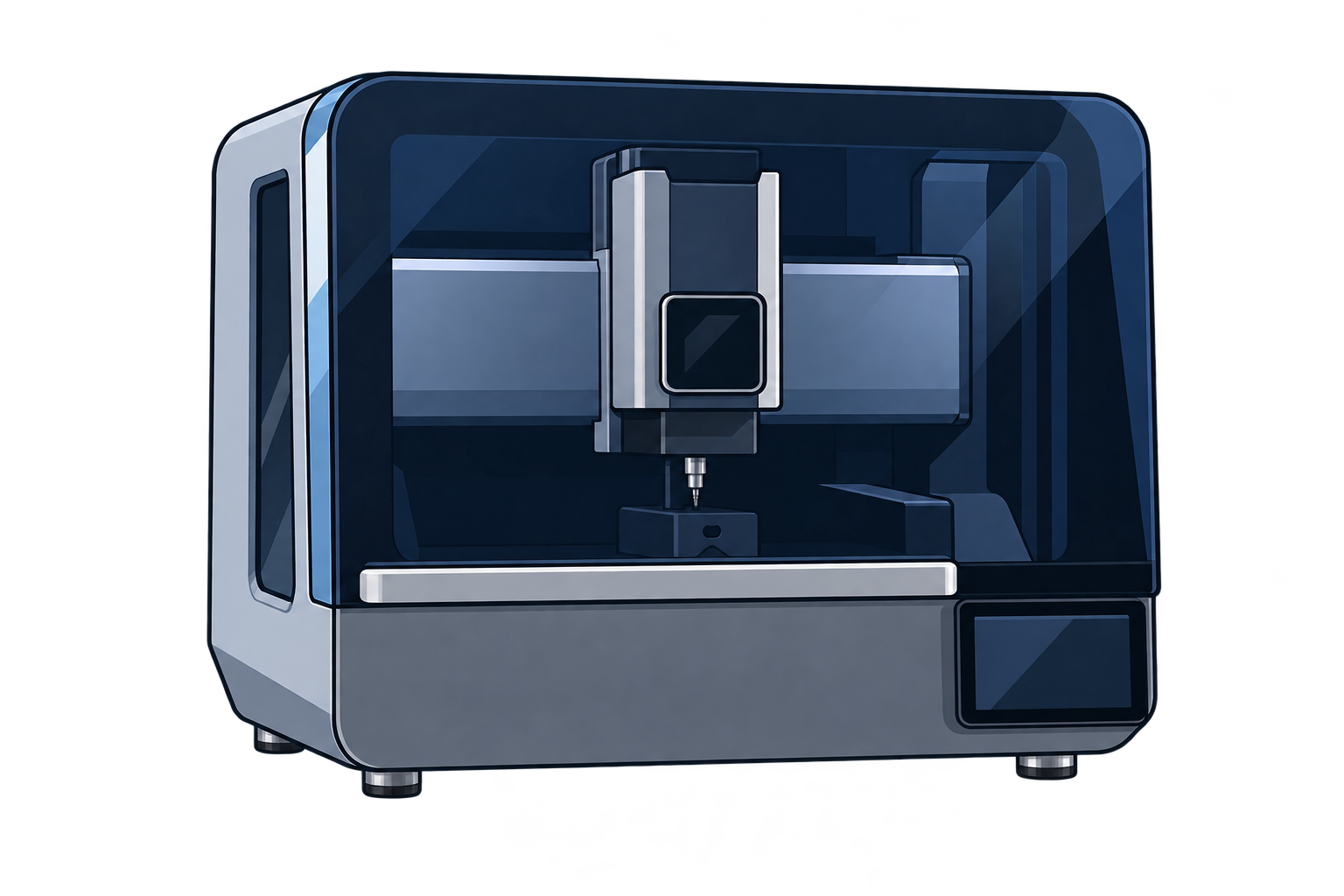
Fabrication
Five-axis CNC with flood cooling for fabrication. Estimated arrival: March 2027.
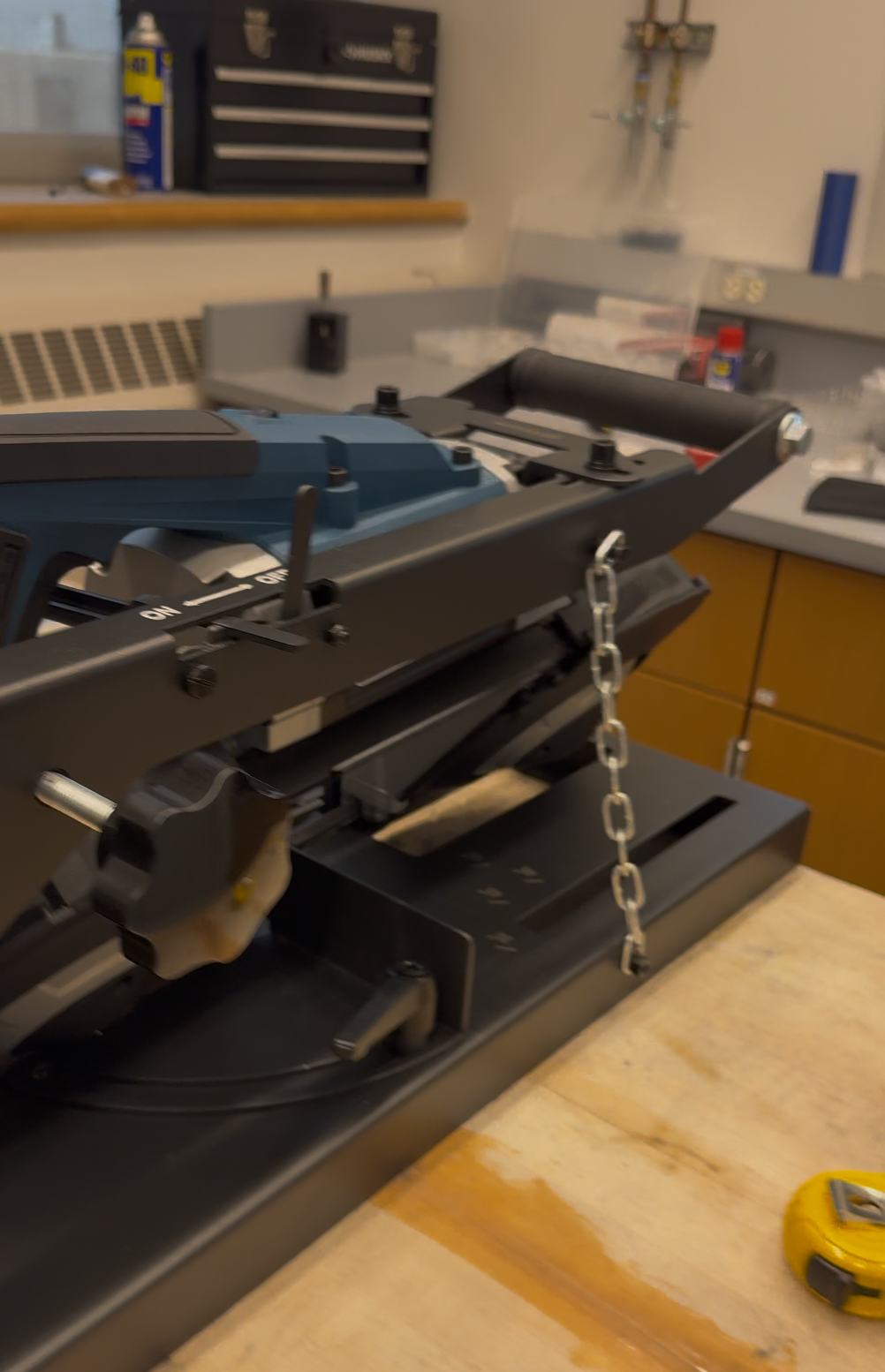
Bench-mounted saw for cutting stock 8020 material to size.
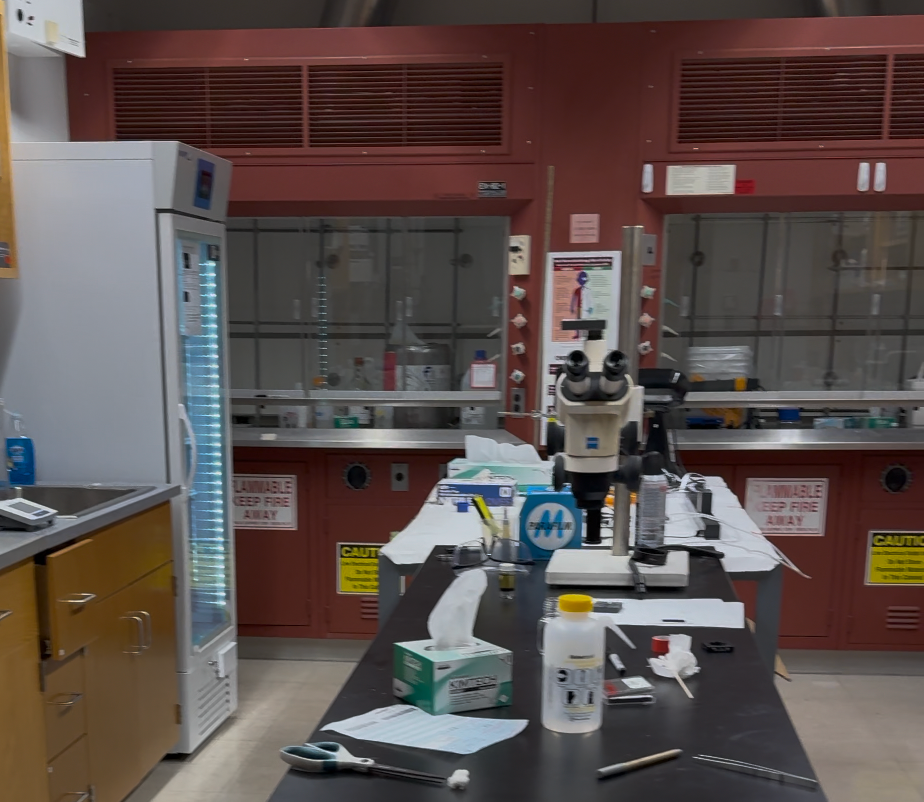
Fume hoods provide ventilated workspaces for laboratory procedures involving fumes or vapors.
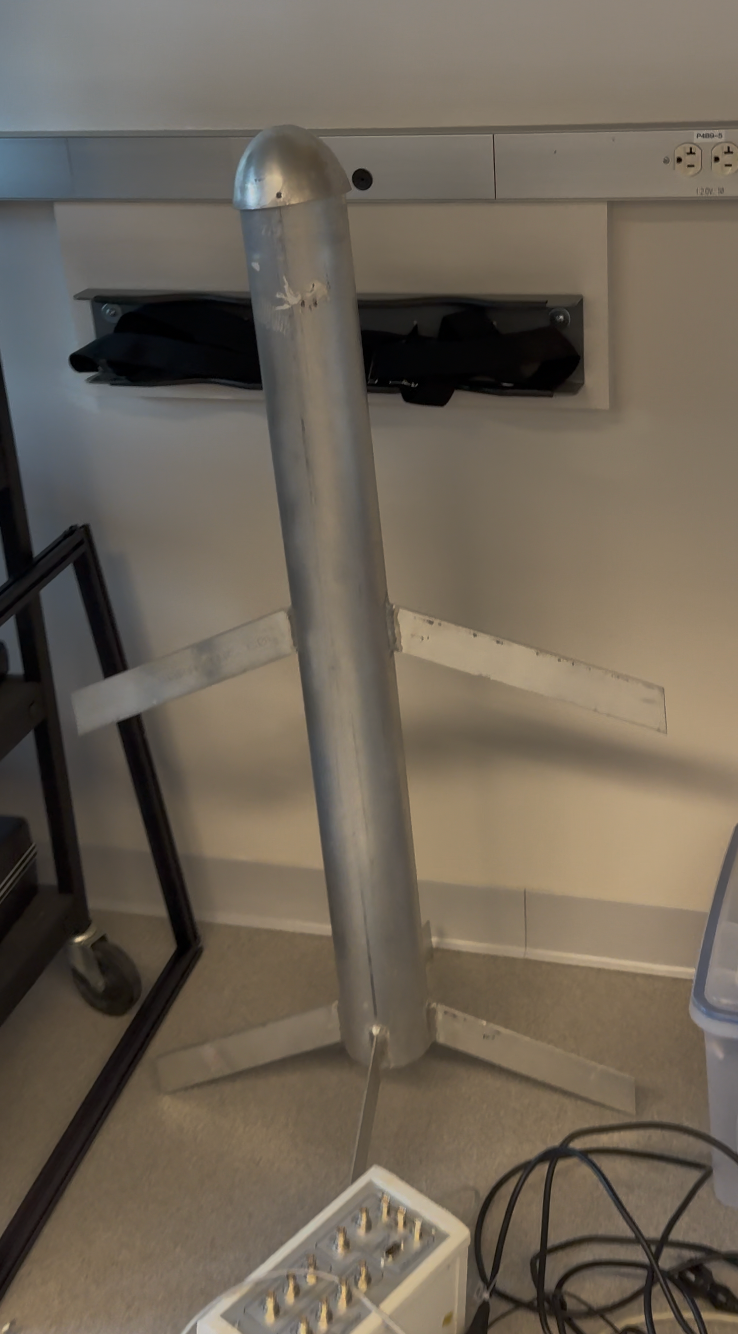
Custom experimental system
The group is building a custom underwater glider intended to use ocean depth to vary experimental pressure and temperature.
The design includes water sampling, imaging, simple automated experiments, and closed onboard waste storage.
The group uses a variety of extensional devices to study fluid response in extensional flow.
The mini-fabrication facility includes tools for microfluidic chip fabrication.